
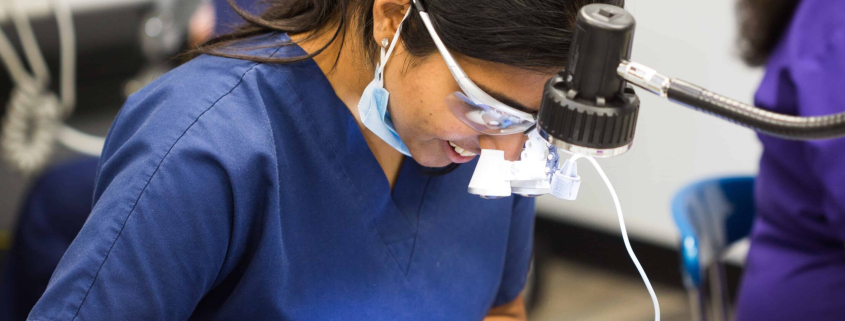
Critical Errors on Dental School Bench Tests: How to Avoid Them
A dental school bench test can decide your place in an advanced standing program. Most candidates who fail don’t fail on one slip. They fail because they don’t understand how high the U.S. grading standard is: how ideal a prep has to be, how smooth, and how exact every measurement and angle must be.
When instructors talk about an “ideal prep,” they mean the form, angles, and measurements commonly taught in U.S. dental schools. Use that as a benchmark when you practice. For your bench test, follow the specific criteria your school gives you, since grading requirements can vary.
In my experience, the bar keeps rising. Candidates in roughly the top 15 to 20% of test takers tend to be the most competitive for admission. That’s my observation, not a published cutoff.
This guide is for internationally trained dentists preparing for a U.S. dental school bench test.
Jump to the at-home Class II amalgam practice plan
Why candidates fail bench tests
The most common reason is not knowing the U.S. standard in enough detail. A prep you would accept in practice can still fail here.
| Error | Why it fails you | How to prevent it |
|---|---|---|
| 1. Leaving undermined enamel | Undermined, unsupported enamel on a proximal wall’s exit angle or on a crown prep’s finish line is an automatic failure. Graders often call these J-shaped margins. | Before you finish, look at every wall and margin from several angles so you can see any undermined areas or J-shaped margins, and remove them. |
| 2. Missing a required measurement | For example, if your school specifies a 1.5 mm minimum pulpal depth, a 1.3 mm prep falls short of that requirement. Use your school’s instructions for the measurements you’re expected to meet. | Learn the required measurement for every feature of each prep, and check your work against them every time you practice. |
| 3. Wrong angles | Angles are graded closely. For example, a slightly flared exit angle can count against you on a Class II amalgam preparation. | Learn the correct angle for each wall and margin of every prep, not only the overall shape. |
| 4. A prep that isn’t ideal or smooth enough | U.S. graders expect near-ideal form and smooth walls. “Good enough” is often a fail. | Practice until ideal form is routine, and have an experienced instructor grade your preps to U.S. standards. |
| 5. Damaging the adjacent tooth | A nicked neighbor shows a lack of control, and graders treat it as one of the most serious mistakes. | Most schools let you bring nothing but your loupes, so you usually won’t have a protective guard. Leave a small, thin shell of enamel next to the contact and break it off very carefully with hand instruments. |
| 6. Working on the wrong tooth or surface | Work on the wrong tooth can’t be graded as the assigned procedure. | Read the assignment twice. Use the American Dental Association (ADA) tooth numbering system to verify the assigned tooth, then touch it with an explorer before the first cut. |
| 7. Running out of time | Unfinished work usually can’t earn a passing grade. | Practice every likely procedure on a typodont under a strict timer until you finish with time to spare. Leave the last 15 to 20 minutes for checking margins and cleanup. |
What changes from school to school
There is no single rulebook for bench tests, so find out what your school expects.
- Procedures: each school picks its own set. Here is what you may be asked to do:
- Class II amalgam preparation: In my experience, this is tested at almost every school, even if that school does not ask you to place an amalgam restoration.
- Restorations: Schools may test Class II, Class III, and Class IV composite restorations. Only a few still test placing an amalgam restoration.
- Crown preps (full gold, PFM, all-ceramic) and provisionals
- A bridge (fixed dental prosthesis) preparation and bridge provisional
- A ceramic onlay from a case: at least one school shows you a photo of the tooth in the mouth and an X-ray of the caries. You diagnose, plan the treatment, then do it on a typodont tooth.
- Endodontic access
- Wax-ups, and at one school, a wax carving exercise
- Removable partial denture design, including surveying (at least three or four schools)
- Diagnosis and treatment planning exercises on complex cases
- An OSCE: you move from station to station, with 45 seconds to a minute at each, answering questions such as evaluating occlusion or assessing impressions
- What you can bring: usually only your loupes, so you have to use the school’s burs and instruments. Only a handful of schools let you bring your own handpieces, instruments, bur blocks, protective guards and polishers.
- Time limits and order: these vary, and schools don’t always publish them in advance.
- Grading: some schools grade each prep against written criteria, others give an overall judgment. All of them expect U.S.-standard measurements, angles and finish.
How to prepare
- Plan on a one-year commitment to refining your skills.
- If you can, start with a hands-on course so an instructor can help you catch mistakes early. If a course is out of reach right now, follow the Class II practice plan below and get feedback as you go.
- Learn the fundamentals of U.S. dentistry first, then every detail: measurements, angles and smoothness for each prep.
- Set up your own practice station at home. It isn’t hard: you need the right turbine system and a compressor quiet enough not to bother your neighbors.
- Practice a lot. Most candidates who do well have completed hundreds of preparations over 6 months to a year.
- Learn the international bur designation system, so you can use whatever the school hands you. For example, an 8856-016 is a fine finishing diamond (30 micron, red stripe) with a rounded end, 1.6 mm at its widest part, and is useful for all-ceramic preparations.
- Learn to sharpen operative instruments. The school’s instruments may be dull, and you’ll be given a sharpening stone. Sharpening well takes significant practice.
- Get feedback under real test-like conditions, from instructors who know how U.S. bench tests are graded.
- Read everything the school sends with your invitation, and ask the admissions office what will be tested if it isn’t clear.
A lower-cost way to practice Class II amalgam at home
If a hands-on course isn’t an option right now, you can still improve. Start with my free Class II Amalgam Preparations videos. Then work through this practice plan on a typodont:
- Do one preparation a day. Give yourself time to look at your own work before you start worrying about speed.
- Get feedback after every five preparations. Pick one and ask someone whose work you trust to show you what they would change. Work on that in your next set of five.
- Add time pressure as you get more consistent. Start timing the full preparation, then work toward your school’s time limit if you know it. Leave yourself time to check your work.
- After about 20 preparations, pick one for a professional review. You can request a Prep Evaluation for $85 per submitted preparation or restoration. I can review Class II amalgam or composite work, including the preparation or the finished restoration. If the order page doesn’t list photo instructions for your submission, ask us what to send.
Think of 20 preparations as a checkpoint, not the end of your practice. A hands-on Bench Prep course is still the best way to get feedback while you work, if you can attend. The goal either way is to get better at seeing what needs to change in your own preparation.
FAQ
How is a bench test graded? Each school sets its own grading, but a 0 to 5 scale is common, with 5 the best. Grades of 3, 4 and 5 usually pass, but you’ll probably need a 4 or higher to be seriously considered for admission.
How long should I prepare? Plan on about a year. Most candidates who do well have practiced hundreds of preparations over 6 months to a year.
Can I practice on my own? Yes, but build in regular feedback so you don’t repeat errors without noticing them. If you can’t start with a hands-on course, use the Class II practice plan above.
How should I practice for time? Run each full procedure on a typodont under a strict time limit, start to finish, several times before the test. Aim to finish with time left to check your work. Then have a mentor, or someone who has passed a bench test, review it.
What if the school doesn’t tell me which procedures to expect? Ask the admissions office what procedures and criteria to expect. Class II amalgam preparation is one skill worth practicing for bench tests; use the at-home plan above. Prepare for other tasks, such as composite restorations, crown preparations, or provisionals, according to your school’s instructions.
Next steps
- Gathering supplies? Use the Bench Prep checklist.
- Setting up to practice at home? See our air turbines and compressors. We’re happy to recommend a compressor system: email help@stevensondentalsolutions.com.
- Still applying? Start with International Dentists: Start Here.
- Watch the technique: Class II amalgam preparation on an Acadental typodont.
- About the author: Meet Dr. Stevenson
Questions? Email help@stevensondentalsolutions.com.